
What is Headless CMS?
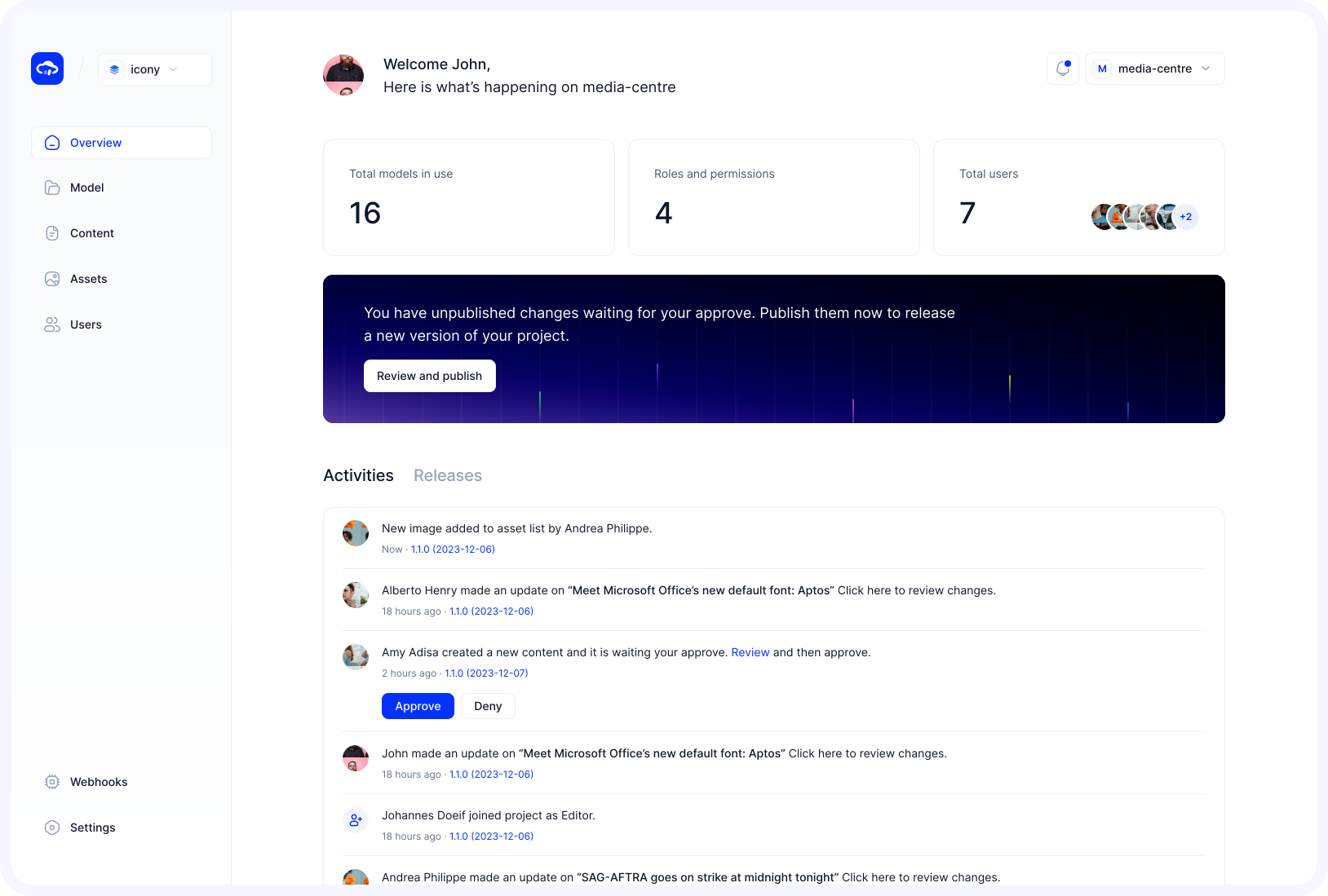
Before diving into Contentrain, look at three foundational concepts you need to know before using our platform: Headless CMS, Jamstack, and Git-based.
Headless CMS
A Headless Content Management System (CMS), is a back-end-only content management system that acts primarily as a content repository.
Headless CMS is a modern approach to content management that separates the "body" (the back end, where the content is stored and managed) from the "head" (the front end, where content is displayed).
Jamstack
Jamstack is an architectural approach that decouples the web experience layer from data and business logic, improving flexibility, scalability, performance, and maintainability.
It removes the need for business logic to dictate the web experience. It enables a composable architecture for the web where custom logic and third-party services are consumed through APIs.
To dive deeper into the world of Jamstack and explore its ecosystem, you can learn more by visiting Jamstack.org or read our Jamstack blogpost.
Git-based
Git is a distributed version control system designed to handle everything from small to very large projects quickly and efficiently. Version control systems allow you to keep track of changes made to files in a project. Software developers use it to manage and track different versions of the software they're developing.
Git-based content management systems allow you to manage content stored on Git within the code stack dynamically. This provides a more flexible CMS experience for content creators while providing the scalability, cost, security, and maintainability provided by Git.
Combining Git and Serverless Platforms
Combining Git with Serverless platforms merging the benefits of version control with the scalability and cost-efficiency of serverless computing. Git provides version control, enabling teams to track changes and better collaboration. Serverless platforms allow users to manage dynamic content without worrying about API bandwidth or vendor lock-in. This combination is especially valuable for complex projects, eCommerce, and omni-channel experiences, setting new standards for efficiency and scalability in software development.
If you want to learn more about what these two technologies can do, you can find out in the linked blogpost.
What is CDN?
A Content Delivery Network (CDN) is a system of distributed servers strategically placed across various geographical locations to deliver digital content, such as web pages, images, videos, scripts, and other web assets, quickly and efficiently to users around the world.
You can learn more about CDN, you can read the blogpost.
How It Works
CDNs work by caching content at multiple edge locations, typically closer to the end users. When a user requests content from a website that uses a CDN, the request is routed to the nearest CDN server (based on factors like proximity and server load) rather than traveling all the way to the origin server where the content is hosted. This process reduces latency, speeds up content delivery, and decreases the load on the origin server.
If you need to learn more about CDN
What is Git?
Git is a version control system designed to manage and track changes in software projects. It operates in a decentralized way, allowing each developer to have a full copy of the repository on their local machine, enabling offline work and rapid local operations such as commits and branching. A Git repository holds project files, a history of commits, and configuration data, with each commit containing a unique identifier (SHA hash) and metadata like the author and timestamp.
Git supports branching, allowing developers to work on separate features or bug fixes without affecting the main codebase, and merging, which integrates these branches into the main project. Its collaborative features allow developers to push changes to remote repositories and pull updates, enabling distributed teams to work together effectively. This combination of flexibility, robustness, and collaboration makes Git essential in modern software development.
You can learn more about the Git
Git based versus API based CMS
Git-based headless Content Management Systems (CMS) and API-first headless CMS offer different approaches to content management and delivery. Git-based CMSs leverage the Git version control system, storing content as files in a repository, providing strong version control and collaboration capabilities, track changes, create branches, and merge content.
If you'd like to learn more about these two types of CMS, you can read the blog post here.
Headless versus Monolithic Content Management Systems (CMS)
A headless Content Management System (CMS) provides more flexibility than a monolithic CMS by decoupling the front-end from the back-end, allowing content to be served across multiple platforms. This architecture supports scalability, customization, and integration with various services, which is beneficial for complex projects.
In contrast, a monolithic CMS has a tightly coupled structure, making it quick to set up and ideal for smaller projects, but it lacks the flexibility and scalability of headless CMSs. When choosing a CMS, consider your specific needs, such as user-friendliness, tech stack compatibility, and scalability requirements. While headless CMSs require more setup and developer resources, they offer greater adaptability for future changes.
To learn more about the advantages and drawbacks of these CMS types, read the full blog post on this topic.